
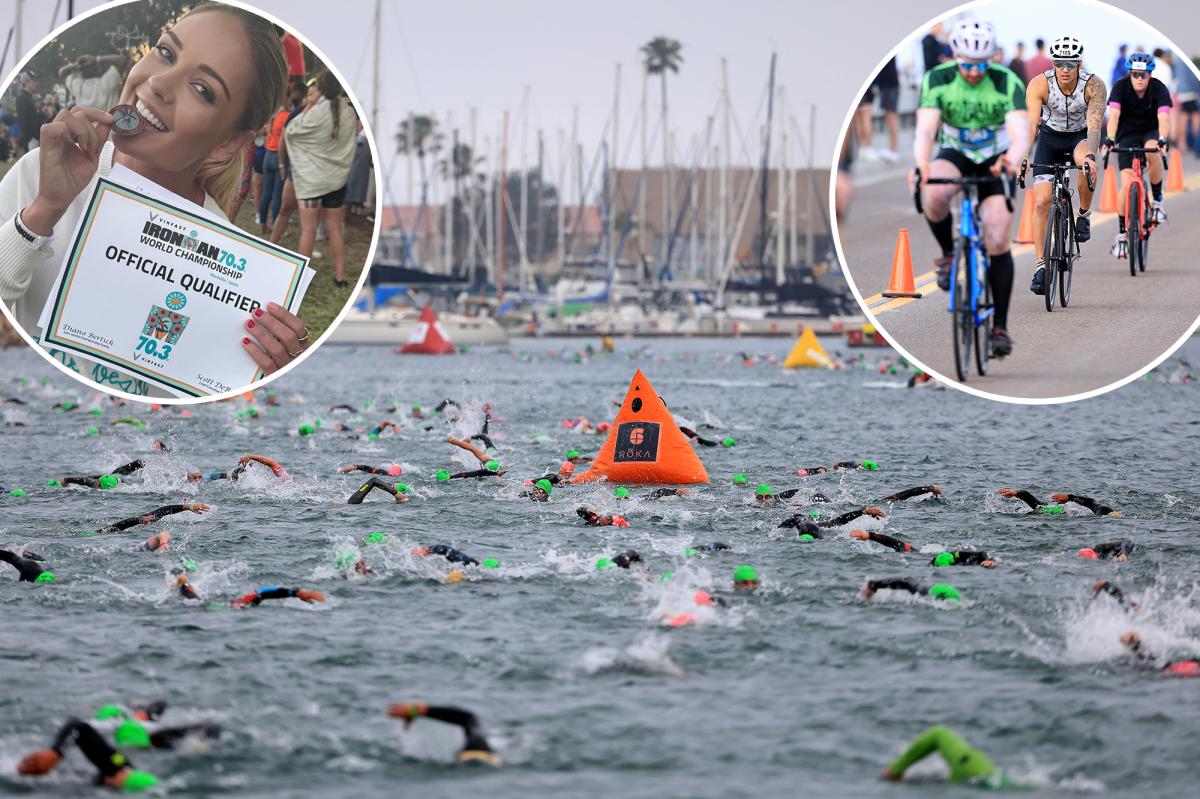
When tragedy strikes at one of the most grueling sporting competitions on Earth, it would be straightforward to assume that a lack of preparation was to blame.
Unfortunately, the unseen risks stay even for the most well-trained athletes.
Mara Flávia, a 38-year-old Brazilian influencer and triathlete, drowned during the open-water swimming endurance portion of the Texas Triathlon in Lake Woodlands on Saturday.
The Montgomery County Sheriff’s Office confirmed that the sufferer “drowned while participating in the swim portion of the event,” according to a assertion, as its Major Crimes continues their investigation “per normal protocols.”
At the time of reporting, the precise cause of Flávia’s demise stays unclear. But even under the greatest circumstances with the most skilled athletes, dangers abound
“While most people focus on the physical exhaustion of triathlons, the most overlooked risks are often environmental and physiological,” Tyler McDonald from the National Academy of Sports Medicine (NASM), whose work focuses on athletes and efficiency, advised The Post.
“Even the strongest swimmers can be sidelined by the chaos of open water.”
Statistically, the swim portion is where the majority of triathlon fatalities happen because it’s the only phase where a minor medical occasion can lead to drowning, McDonald defined.
“Unlike the bike or run, where you can simply stop and sit down, the water is an unforgiving environment where you must maintain buoyancy while dealing with a crisis,” he said, noting that a panic attack, a transient coronary heart arrhythmia or even a cramp can be deadly.
Plus, an open-swim competitors comes with a lot of outside elements that are out of the athletes’ management. At NASM, they refer to the “washing machine effect.” During the mass begin of the swim part, triathletes are confronted with a whirl of arms and legs all around them — and getting kicked or pushed underwater can set off an prompt panic response, McDonald defined. Once struggle or flight kicks in, rhythmic respiration “goes out the window, and even a pro can start to struggle.”
Open water also lacks the “black line” of a pool, which can lead to visibility and orientation points. Losing sight of the shore or buoys due to glare or uneven water can end result in spatial disorientation, finally main to inefficient swimming and speedy exhaustion.
Mara Flávia drowned during the swimming endurance portion at the Ironman competitors in Texas. maraflavia/Instagram
But the most neglected threat individuals face in the swim portion of a triathlon is the temperature of the water. According to McDonald, chilly water shock can cause an involuntary gasp reflex, main to water inhalation before the swimmer even begins their first stroke.
To assist fight this, he suggested warming up in the water prior to the race if doable, and “never start a race cold.” Getting a 5- to 10-minute acclimation in the water before swimming can assist mitigate the cold-water shock response.
He added that the “powering through” mentality, a false impression that belies a triathletes readieness or security, encourages rivals to push through the ache in coaching, ignoring signs like chest tightness, excessive lightheadedness or sudden tingling — all of which shold be thought of purple flags.
An open-swim competitors comes with a lot of outside elements that are out of the athletes’ management. Sean M. Haffey/Getty Images for IRONMAN
Many folks in the r/IronmanTriathlon sub-Reddit web page echoed this sentiment, with one individual saying the tragedy that occurred in Texas “furthers my hate for the ‘lol I just need to survive the swim’ mentality.”
“I’ve been around long enough to have known about (or race at) multiple races that have had swim deaths. It’s usually nothing to do with the athlete’s swim competence, and more to do with multiple contributing factors that create a ‘perfect storm’ with a tragic outcome,” another consumer wrote.
“Hearing about what happened on the swim made me reflect on how much I’ve probably underestimated that part of the race and the real risks involved,” someone who competed in the same race shared.
With all these potential dangers, McDonald said every athlete should be in a position to grasp the “safety stroke,” flipping onto their back and performing a relaxed breaststroke or backstroke to decrease their coronary heart fee.
The most neglected threat individuals face in the swim portion of a triathlon is the temperature of the water. Sean M. Haffey/Getty Images for IRONMAN
“In a triathlon, there is a fine line between mental toughness and ignoring a medical emergency,” McDonald advised The Post.
It’s not just the swimming portion of a triathlon that athletes want to be cautious with. When it comes to the bike portion, the most neglected threat is cognitive fatigue, McDonald said. As blood sugar drops, response time slows, which makes high-speed technical descents much more harmful than the bodily exertion itself.
With the run, the threat is typically cardiac drift, where coronary heart fee rises steadily despite sustaining a fixed tempo due to warmth stress and dehydration. This can put an sudden pressure on the cardiovascular system late in the day and pose a potential threat.
The most neglected threat is cognitive fatigue for the biking portion. Sean M. Haffey/Getty Images for IRONMAN
In basic, exertional hyponatremia, doubtlessly deadly situation where blood sodium ranges drop dangerously low from over-drinking plain water, can have an effect on even the best-trained athletes, McDonald said.
Using the “sweat rate test” during coaching can assist athletes decide how much fluid and electrolytes their physique will want on race day, and figuring this out in advance can stop any day-of guessing.
Many athletes may also have undiagnosed underlying coronary heart circumstances such as hypertrophic cardiomyopathy that can be triggered by the “perfect storm of race-day adrenaline, cold water and max-effort exertion.”
Before beginning a high-intensity program, McDonald recommends getting a cardiac screening with a easy EKG or stress take a look at can determine any hidden dangers.
McDonald suggested athletes to practice for the surroundings, not just the distance. Getty Images for IRONMAN
No matter how much one trains for or participates in a triathlon, there are always dangers to the massive race.
“Preparation doesn’t make you bulletproof,” McDonald urged, including that coaching alone is not always going to shield an athlete.
“Training usually happens in controlled environments, lanes in a pool or familiar roads. This training builds aerobic capacity, but it doesn’t always build resilience to chaos,” he defined. “A highly trained athlete might have the engine to finish, but if they haven’t practiced sighting in choppy water or drafting in a crowd, their body’s stress response can override their physical conditioning.”
“Preparation doesn’t make you bulletproof,” McDonald urged. Sean M. Haffey/Getty Images for IRONMAN
McDonald’s single most essential recommendation to athletes getting ready for a triathlon is to practice for the surroundings, not just the distance. For instance, if your race is going to be in the ocean, apply in the ocean. If it’s a hilly course for the bike, don’t only apply biking on flat roads or programs.
“Familiarity with the specific stresses of the race-day environment is what keeps your mind and your body calm in the chaos, and staying calm is what keeps you safe,” he said.
Source hyperlink


