
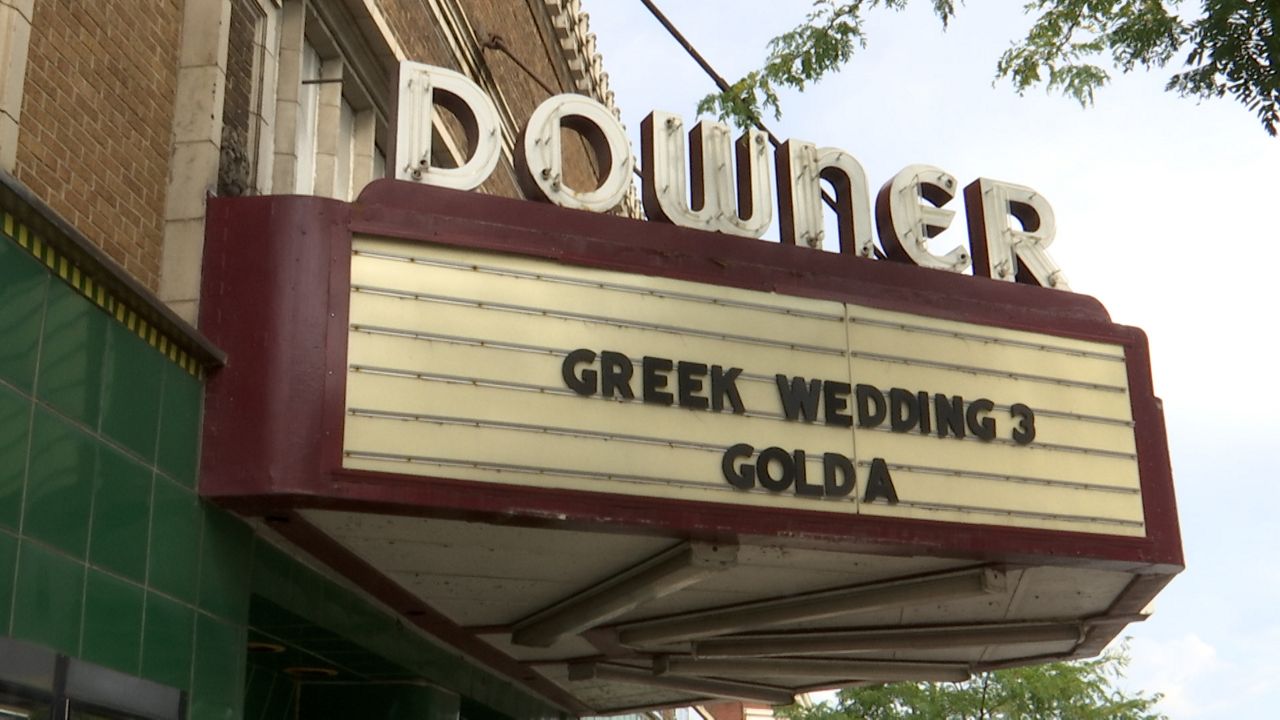
MILWAUKEE — Like the remainder of the world, Downer Avenue has modified quite a bit during the last 108 years. In reality, little has remained the identical alongside this stretch of Milwaukee’s east facet.
Nonetheless, all through that point, the Downer Theatre has remained a continuing. Many close by residents thought it at all times would.
Jane Terry woke as much as the news that the theater had unexpectedly closed its doorways. Terry mentioned it’s a loss for the neighborhood, particularly for a constructing crammed with so many recollections.
“I was dismayed. It is a part of Milwaukee history,” mentioned Terry. “I’ve gone to the theater for years. When I lived in Appleton, my husband and I would come down to the city and go to the Downer, I was surprised and not happy.”
The circumstances main as much as the closure are usually not clear; Landmark Theatres, the movie show chain that owns the theater, didn’t present a remark.
“We have high hopes in finding a solution that continues to respect the tradition and historical integrity surrounding this incredible theatre that’s been a foundational institution in Milwaukee’s beloved Downer Avenue Commercial District for more than a century,” President of the Downer Avenue Enterprise Enchancment District Michael DeMichele mentioned on Wednesday in a joint press launch with Bridge33 Capital, the agency that acquired the constructing occupied by the theater in April 2020, and nonprofit Milwaukee Movie, which operates the Oriental Theatre.
One factor that is still clear is that many small theaters throughout Wisconsin have confronted challenges in recent times. Whereas the COVID-19 pandemic and altering viewing habits, together with the rise of streaming, have affected quite a few theaters massive and small, the affect is usually felt at small theaters first.
Jocelyn Szczepaniak-Gillece heads the Movie Research program on the College of Wisconsin-Milwaukee. She mentioned small theaters have much less to fall again on when ticket gross sales dip.
“We see small theaters can’t rely on so many extraneous elements of support from the populous such as concessions, larger screens, larger seats that bigger theaters in the suburbs and part of bigger chains have access to those things, they have additional capital,” Szczepaniak-Gillece mentioned.
Current historical past reveals that what occurs to shuttered smaller theaters can range. In Wauwatosa, discussions are underway to reopen the Rosebud Cinema as a nonprofit. Within the central Wisconsin metropolis of Waupaca, the Rosa Theater reopened in June as a part of the regional Rogers Cinema chain.
Szczepaniak-Gillece mentioned extra small theaters may shift to exhibiting older classics primarily based on neighborhood demand.
“That is a trend that I think can be really beneficial to a smaller local theater because you can take the pulse of what the local community is invested in and not just show ‘Oppenheimer’ or ‘Guardians of the Galaxy,’ but also show whatever the local population is really invested in,” she mentioned.
In the meantime, Milwaukee Movie is in talks with enterprise officers concerning the way forward for the theater.
“We are honored to be a part of this active conversation and excited about this possibility.” Milwaukee Movie’s CEO Jonathan Jackson mentioned within the joint press launch. “We are going to at all times champion fostering cinematic areas and creative voices and experiences in our neighborhood to carry folks collectively any approach we will.”
No matter what occurs, many within the neighborhood hope to see Downer Theatre reopen quickly.
Article Supply and Credit score


